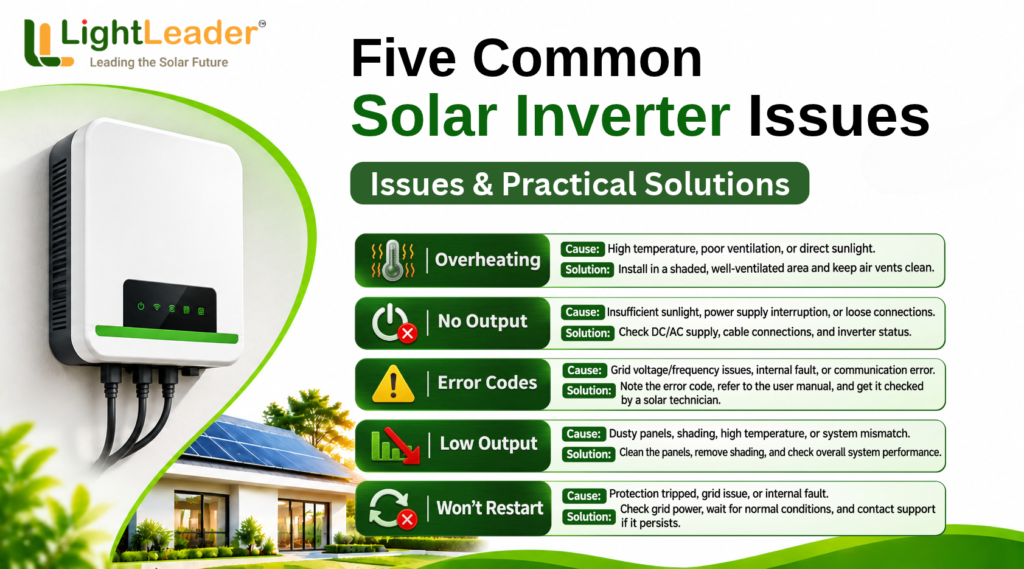
Five Common Solar Inverter Issues
(And How LightLeader Solves Them)
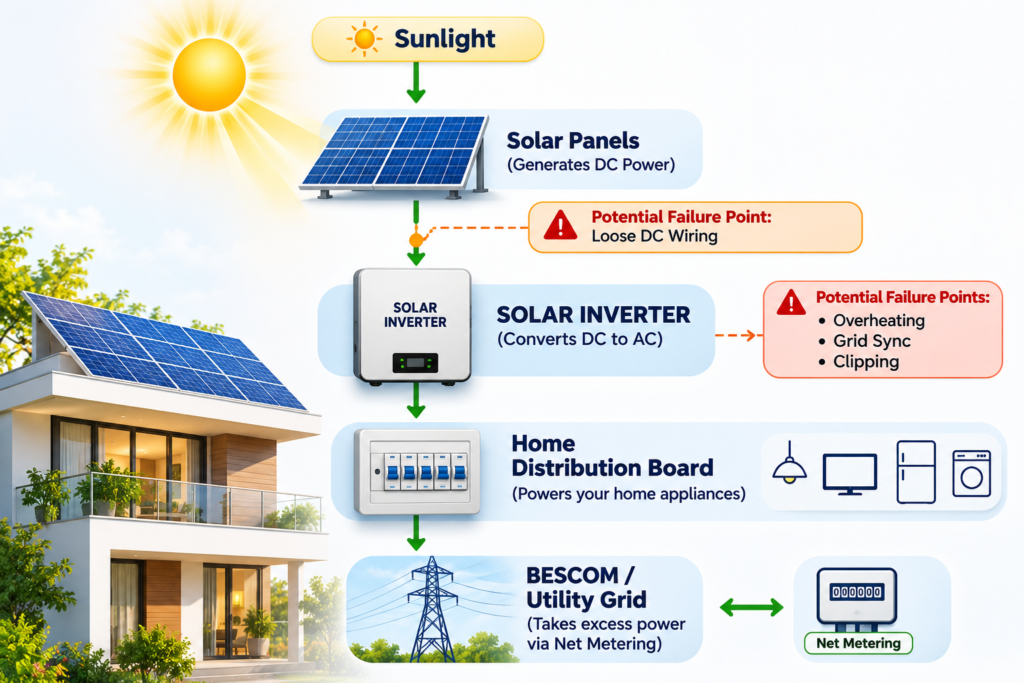
Making the commitment to switch to solar is a smart financial move, especially with the PM Surya Ghar Muft Bijli Yojana making rooftop installations more affordable than ever. But while solar panels get all the glory, your inverter is the actual workhorse of the system. It converts the Direct Current (DC) generated by your panels into the Alternating Current (AC) that powers your home appliances.
When your solar setup underperforms, the inverter is usually where the issue lies. Here are the five most common inverter problems homeowners face and how we prevent them during our installations.
How Your Solar System Works (And Where the Inverter Fits In)
1. Inverter Overheating
Inverters work hard, and generating power creates heat. If the inverter gets too hot, it will automatically reduce its power output to protect its internal components, leading to a drop in your energy savings.
The LightLeader Fix: We don’t treat inverter placement as an afterthought. Our team specifically selects well-ventilated, shaded areas for your inverter during our initial site assessment. We ensure afternoon heat doesn’t choke your system’s efficiency by maintaining proper clearance for the unit’s cooling fans.
2. Inverter Not Turning On or Showing Zero Output
Waking up to find a blank inverter screen or zero power output is frustrating. This is often caused by tripped breakers, loose wiring, or a grid synchronization failure.
The LightLeader Fix: Quality components matter. We use premium DC solar cables and ensure every connection is rock-solid. Plus, with our remote system monitoring, if your inverter drops to zero output, we often spot the issue and dispatch a technician before you even notice a dip in your generation.
3. Confusing Error Codes and Fault Alerts
Seeing a flashing red light or a random string of numbers on your inverter screen can feel like trying to read a foreign language. These codes can signal anything from a minor software glitch to a serious grounding issue.
The LightLeader Fix: We only install top-tier, quality-tested inverters that feature user-friendly monitoring apps. Instead of forcing you to decode an engineering manual, our integrated apps translate these faults into plain English. If a complex error does pop up, our local on-call support team is ready to step in.
4. Poor Output Despite Good Sunlight
It is a bright, cloudless day, yet your app shows surprisingly low energy production. While panel shading is a common culprit, the issue could also stem from “inverter clipping” (where the panels produce more DC power than the inverter can convert) or worn-out internal components.
The LightLeader Fix: Proper system sizing is crucial. We carefully match your inverter capacity to your panel array so you don’t lose valuable units of electricity to clipping during peak sunlight hours. We design the system specifically for your roof’s orientation and local weather patterns.
5. Inverter Not Restarting After a Power Cut
Your on-grid solar system is designed to shut down during a grid failure to protect linemen working on the wires. However, once the BESCOM power returns, your inverter should automatically reconnect. Sometimes, grid fluctuations prevent this automatic restart.
The LightLeader Fix: We configure the grid synchronization settings on your inverter to handle typical local voltage fluctuations gracefully, ensuring a smooth, automatic restart when the grid comes back online.